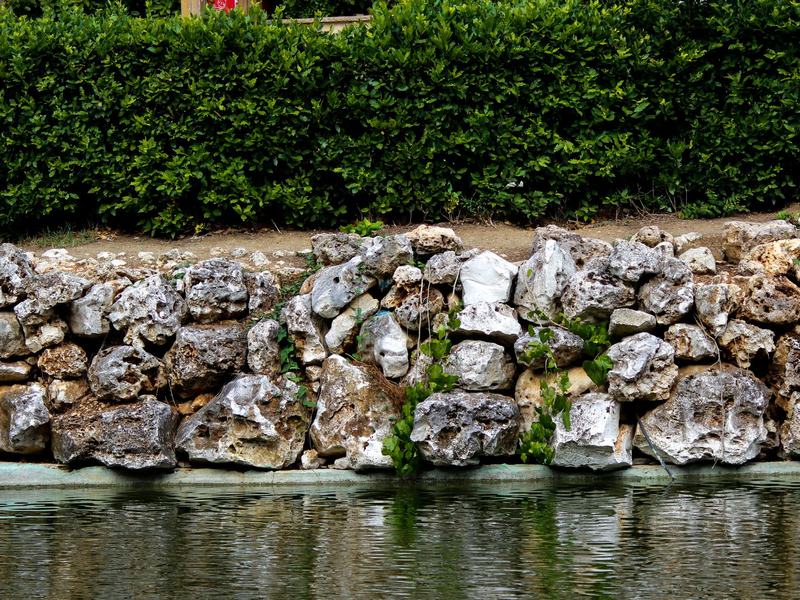
Timing your retaining wall project around La Crosse weather and frost dates saves money and prevents problems down the road.
The best time to install a retaining wall in La Crosse is from late May through early October. The ground is thawed and workable, equipment can move around without tearing up wet soil, and you have enough warm weather left for the wall to settle and any new plantings to take root before winter. Most contractors are busiest in July and August, so if you want a summer install, reach out in March or April to get on the schedule.
La Crosse typically sees the first frost around October 16 on average, though it can come as early as October 2 or as late as mid-November. You want your wall finished and backfilled at least a few weeks before frost so the soil has time to compact and the site stabilizes. A wall built in late September gives you that buffer. Waiting until late October is risky because cold weather and early snow can shut down the project halfway through.
Spring can be tricky. The ground thaws by late April, but May is often wet. La Crosse gets heavy rains in spring, and a saturated construction site turns into a mud pit. Excavating and hauling gravel when the ground is soggy makes a mess and delays the job. If you plan a spring project, be ready for weather delays.
La Crosse weather is hard on retaining walls. We get about 30 inches of rain a year, with the wettest months from April through June. Summer thunderstorms drop heavy rain in a short time, and that runoff has to go somewhere. If your wall does not have proper drainage and you get a 3-inch cloudburst, water pressure can push the wall forward or wash out the base. Building during dry weather in late summer or early fall means the contractor can see how water moves across your site and plan the drainage right.
Flooding is a real concern here. The Mississippi River has flooded multiple times in recent decades, with major events in 1965, 1993, 2001, 2018, 2019, 2023, and 2024. Even if you are not right on the river, low-lying areas and coulees in La Crosse can flood during heavy rain. A retaining wall built too low or without a way for water to escape will fail when the next big storm comes through.
Freeze-thaw cycles are the other challenge. La Crosse winters are cold with plenty of snow. If water soaks into the soil behind your wall and then freezes, it expands and pushes the wall outward. Over a few winters, that freeze-thaw pressure can crack the wall or tip it forward. Walls built in summer or early fall have time to settle and drain before the first freeze, which helps them survive winter.
La Crosse County has varied soil. Near the Mississippi River valley, you find sandy soils that drain well but do not hold much water. Up on the bluffs and ridges, the soil is mostly silt loam over sandstone or dolomite bedrock. Silt loam is fertile for crops, but it holds water and erodes easily on steep slopes. When that soil gets wet in spring, it is heavy and hard to dig. When it dries out in summer, it can get rock-hard.
The best digging conditions are in late summer and early fall when the soil has dried out but is not yet frozen. A skid steer or excavator can move dirt efficiently, and the trench for your wall footing stays clean and stable. If you try to dig in April or May when the ground is saturated, the sides of the trench can slump and the bottom turns to mud. That makes it hard to set a solid base for the wall.
Steep slopes are common around La Crosse. We live in the Driftless Area with bluffs that rise 500 feet above the river valley. Building a retaining wall on a steep slope requires careful grading and erosion control. Doing that work during the dry season means less mud washing down the hill and less cleanup after the job is done.
Contractors book up fast in the summer. If you want a wall installed in June, July, or August, start calling in February or March. By the time the ground thaws in late April, the good contractors already have their schedules full through mid-summer. Waiting until May to start looking means you might not get on the schedule until September.
Early fall is often the sweet spot for availability. After Labor Day, many homeowners are done thinking about outdoor projects for the year. Contractors have openings, the weather is still good, and the ground is dry. A September or early October install gets your wall done before winter and often costs less because demand is lower.
Avoid trying to squeeze in a project in November. Even though we sometimes have nice weather into mid-November, the risk of an early freeze or snowstorm is high. If the contractor gets halfway through your job and the ground freezes, the project sits unfinished until spring. You are left with a torn-up yard, exposed dirt, and erosion problems all winter. It is better to wait and start fresh in May than to gamble on late fall weather.
La Crosse has seen severe storms and flooding in 2017, 2018, 2019, 2023, 2024, and 2026. If a storm washes out your retaining wall or creates new erosion on your property, you need to act quickly. Take photos of the damage, measure how much soil washed away, and check whether the failure is threatening your foundation, driveway, or neighbor's property.
Call a contractor who can come out and assess the situation. A failed retaining wall usually means the drainage was inadequate or the wall was not built strong enough for the soil pressure. Simply rebuilding the same wall the same way will lead to the same failure. A good contractor will dig into the problem, figure out where the water is coming from, and redesign the drainage system so it does not fail again.
If the damage is urgent and it is winter, some contractors can do emergency work even in cold weather. Expect to pay more because frozen ground is harder to work and materials may need special handling. If the damage is not immediately threatening a structure, it is often smarter to put up temporary erosion control and wait until spring to rebuild the wall properly. Contact the city Engineering Department at 608-789-7505 if you have questions about storm damage and what temporary measures you can take.
Also in our network: Best Time of Year to Build a Retaining Wall in Cedar Rapids, Best Time of Year to Build a Retaining Wall in Dubuque, IA.
Send us a few details and a photo and we will get you a free quote.
Get my free quote LA CROSSE